
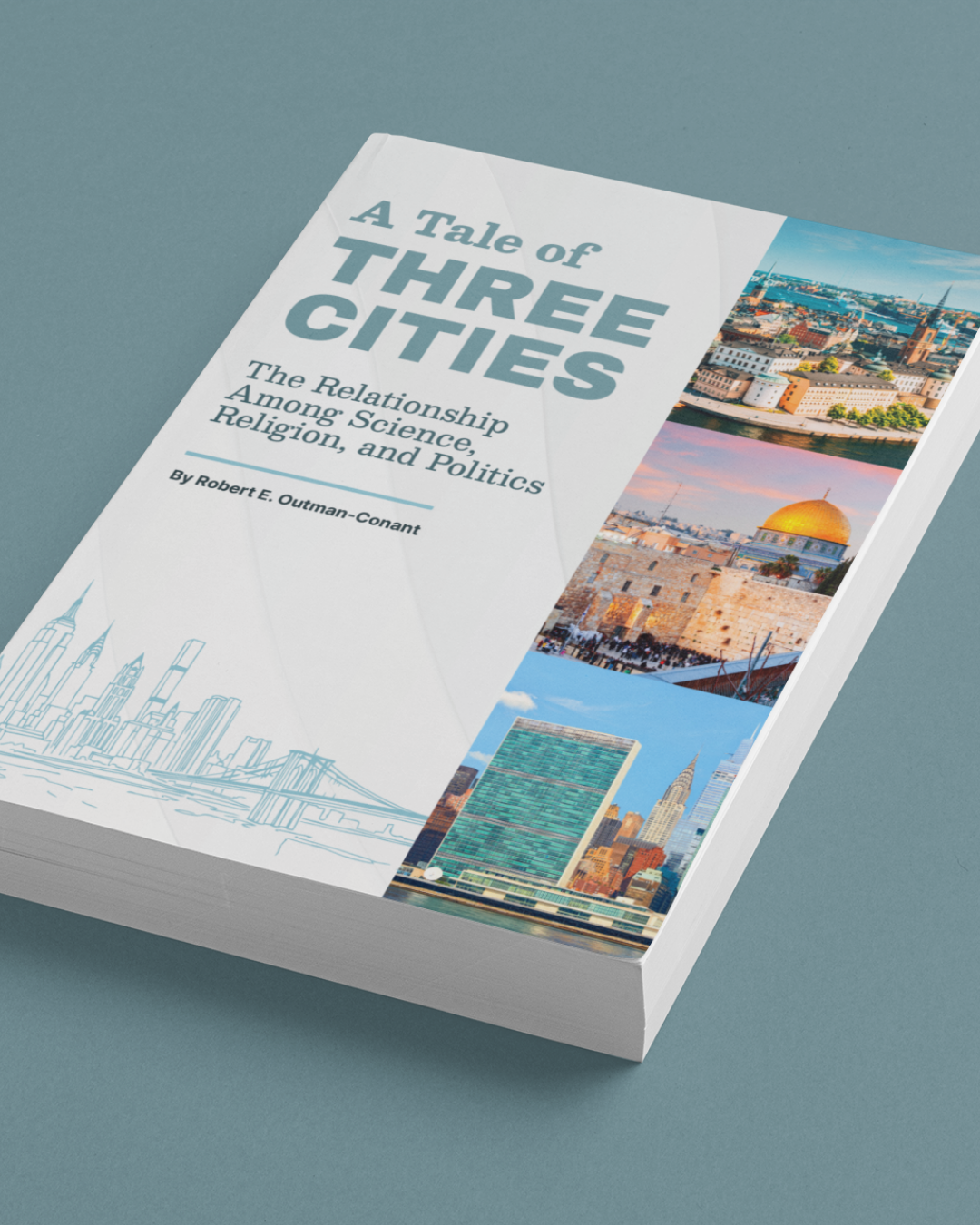
Exploring the Connection Between Science, Religion, and Politics: A New Perspective on Faith and Fact
A Tale of Three Cities: The Relationship Among Science, Religion, and Politics by Robert Outman-Conant
The divisions we feel today between science, religion, and politics can seem impossible to bridge. But what if they were never meant to be separate in the first place? A Tale of Three Cities invites you to rethink what these forces really are and how they shape the way we live every day.

Book Out Now!

A Fresh Look at Science, Religion, and the Way We Live
Science versus religion. Faith versus fact. And politics — the force that turns belief into action.
This book refuses easy answers. Instead, it takes readers inside science, religion, and politics not as institutions at war, but as living practices — shaped by real people, real questions, and real stakes.
Through vivid storytelling and clear-eyed analysis, the author draws a sharp line between what science can prove and what religion is actually for — revealing that their conflict is largely a case of mistaken identity. He then makes a provocative claim: politics is religion in action, and religion is politics at prayer.
In the end, this is a book about how we live together. Science gives us the facts. Religion gives us meaning. Politics turns both into something actionable.
Written to provoke honest reflection — not to demand agreement — this is the book for anyone who has ever wondered whether these three forces have to be at war with each other, or whether they were always meant to work together.


"Because there can be a lot of emotional investment in the words science, religion, and politics, I want to desensitize and destigmatize them. If we can become more comfortable using the words as they refer to ourselves, then I hope we can gain a deeper understanding of the phenomena underlying these words. To help, I will give specific examples of how we all do science, religion, and politics throughout our daily lives. These three are at the foundation of our human lives, just like eating food, drinking water, and breathing oxygen. Just as we cannot live physically without food, water, and oxygen, so we cannot interact with the world around us without doing science, religion, and politics.
I will define these three words as being dynamic and functional, not as being static and institutional; I will invite us to consider them from the point of view of their being verbs and not nouns, that is, seeing them as descriptions of what we do and not as statements of who we are. We become what we do. The doing comes first. It is foundational."
A Glimpse Inside the Book

About Robert Outman-Conant
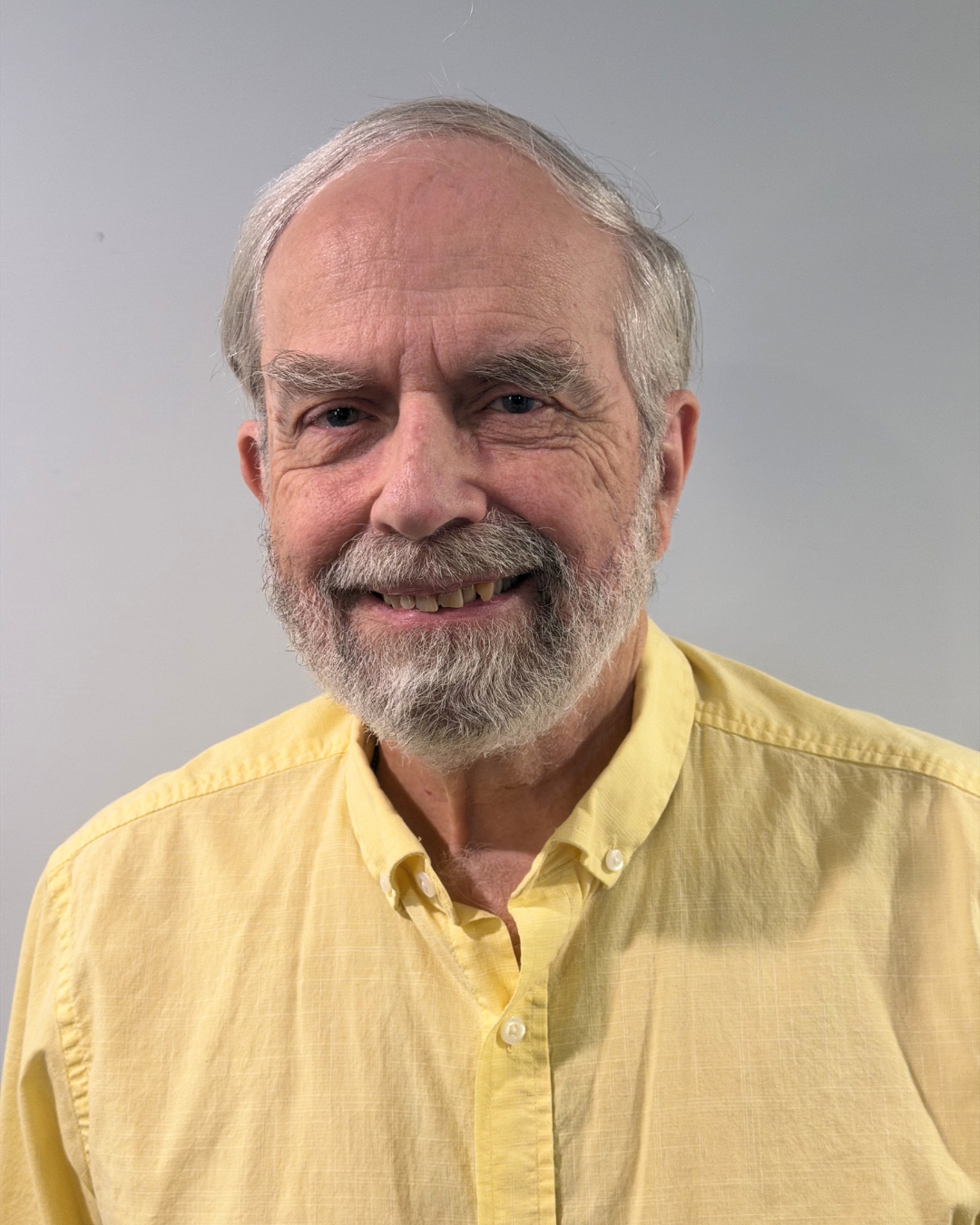
Some books are written. This one was lived.
Born in Vermont in 1947, Robert Outman-Conant has spent a lifetime at the intersection of faith, science, and social change. He studied at Western Maryland College, Virginia Theological Seminary, and Andover-Newton Theological Seminary — then spent nearly four decades in parish ministry, serving working-class communities across Massachusetts, where the questions in this book weren't abstract. They were personal.
Alongside his ministry, he maintained a 30-year private practice as a licensed mental health counselor, worked on the D.C. staff of a U.S. Senator, and has been active since the 1960s in civil rights, anti-war, and social justice movements.
Now retired, he lives a full life centered on family, church, and an undiminished sense of curiosity. This book is the product of a lifetime of thinking, questioning, and refusing to stop asking why.

Three Perspectives. One Conversation.
Questions for Scientists, People of Faith, and Educators
This book doesn’t offer easy answers. Instead, it invites readers from different perspectives to ask better questions. Whether you approach the world through science, faith, or education, these ideas are meant to challenge assumptions and open the door to deeper understanding.
-
A challenge to reconsider the role of religion not as opposition, but as a complementary force in understanding human experience.
What if there are no true contradictions between science and religion, only misunderstandings about their roles?
Science focuses on the quantitative side of life. What happens when we acknowledge that religion speaks to the qualitative?
Are we weakening science when we attack religion in its name, rather than clarifying its boundaries?
If science provides facts, what role does religion play in shaping the vision needed for meaningful social change?
Our ancestors practiced forms of science without the modern scientific method. What can that tell us about how knowledge evolves?
Why were earlier societies more focused on “why” and “who” questions, rather than just “what” and “how”?
How do you respond to the idea that even highly evolved animals, like chimpanzees, might exhibit forms of religious behavior?
In what ways has religion historically embraced or adapted to scientific discovery?
How should scientists thoughtfully respond to challenges like the rejection of evolution from religious perspectives?
What are practical ways scientists can work with religious communities to advance science-based social change?
-
An invitation to engage science without feeling the need to defend or retreat from it.
What if nothing in science is actually capable of disproving the core truths of religion?
When our ancestors described the world, they did so through a religious lens. How does that shape how we interpret those traditions today?
Do we really need to reject science in order to remain committed to our beliefs?
If religion provides vision and meaning, how does that naturally extend into political and social action?
What does it mean to say that religion only works when it is lived voluntarily, not imposed?
How can you meaningfully integrate scientific understanding into your personal faith and daily life?
In what ways can science actually help you live out your values and ethical commitments more fully?
-
A practical and philosophical framework for teaching in a world where science and belief often collide.
How can understanding the difference between science and religion make you a more effective teacher of both?
What does it look like to respect all religious viewpoints without compromising scientific integrity?
How can you create a classroom environment where scientific inquiry and personal belief are both treated with respect?
While teaching science, how do you acknowledge religious perspectives without allowing them to derail the lesson?
When a topic like evolution raises questions about divine intelligence, how do you handle the moment thoughtfully and constructively?